
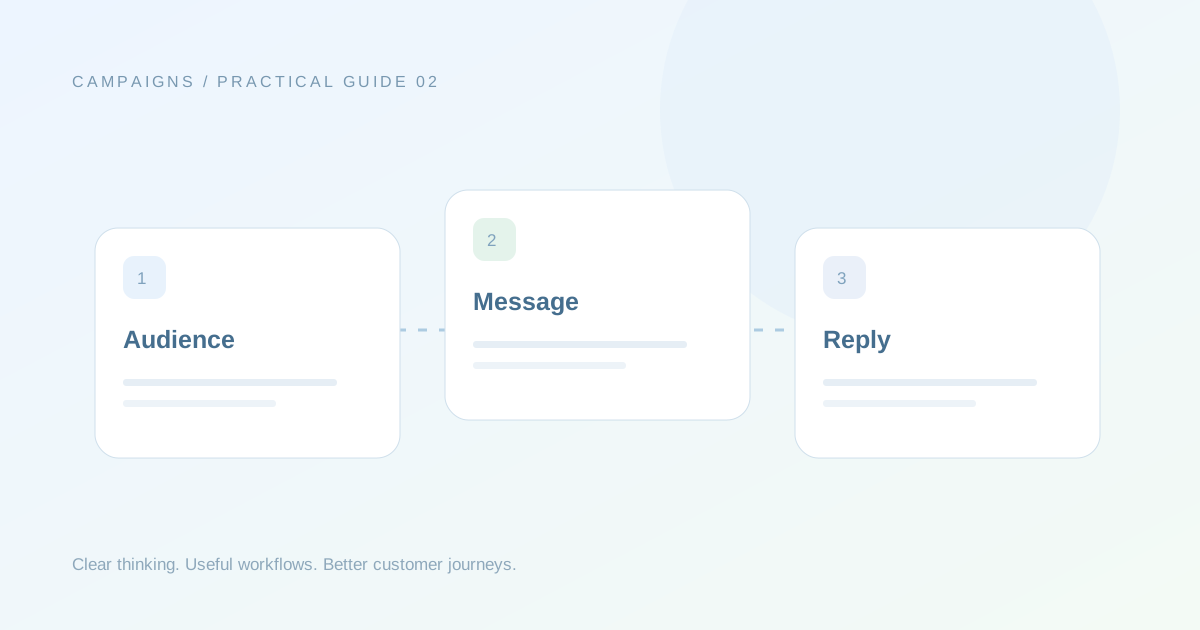
A campaign becomes useful when the right people receive a message with a clear reason and a practical next step. The work starts before the template is written. Define the audience, the action and the plan for replies so that a successful campaign does not create an unmanaged inbox.
Write the brief in one sentence
Use a simple format: “We are helping this audience do this next action because of this relevant context.” A collection launch for customers who asked about a product category is more specific than a promotion to every contact. Choose one primary action. If the message tries to introduce a product, book a call and collect feedback at once, the customer has to do the planning for you.
Prepare the response path
Imagine a recipient asking about price, availability, delivery or a different option. Decide which questions can use approved information and which need a person. Assign a sales or support owner before launch. Create relevant contact fields for expressed interest rather than adding an unrelated tag to every reply. Keep the first answer helpful even when the customer does not follow the expected button.
Review signals with the original goal
Available delivery and engagement signals help diagnose what happened; they do not replace business context. Compare audience relevance, the message action and the quality of replies. A campaign that produces service questions needs different follow-up from one that produces buying interest. Agree stop conditions for responses, completed actions and opt-outs before planning the next message.
Your practical checklist
- Audience and reason documented.
- One main action selected.
- Template content reviewed.
- Reply owner assigned.
- Follow-up and stop conditions agreed.