
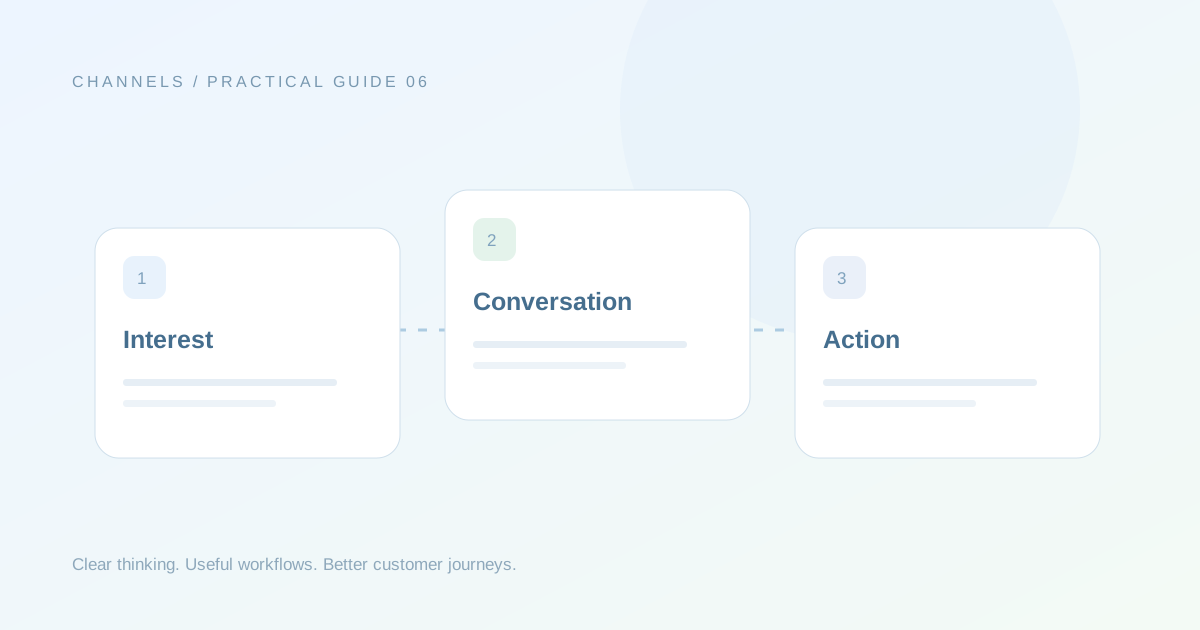
A public comment often contains interest but very little context. A useful private-message journey gives the person the information they asked for and a clear way to continue. Design the content and the response path before deciding how many triggers to enable.
Choose the interaction you want to support
Identify a specific post, product or service enquiry and the response that would be useful. A request for collection details needs a different welcome from a support question. Review the account, permissions and current API capabilities for the intended interaction. Availability and rules can change, so confirm the exact scope during implementation rather than assuming every comment or message can start the same journey.
Keep the private response relevant
A direct message should connect visibly to the customer’s interest. Share the requested product information or a focused service choice. Ask one useful follow-up question instead of sending a large introduction. Keep the language consistent with the post. If the customer changes the subject or asks for a person, the journey should make that change straightforward.
Plan the handover to sales or support
Agree which details make the enquiry useful: product category, service interest, project requirement or preferred callback topic. Avoid asking for information your team already has. Decide where the enquiry is recorded and who owns the next answer. Test a normal enquiry, an unsupported request and a customer who does not choose any of the suggested options.
Your practical checklist
- Interaction and account scope reviewed.
- First response matches the post.
- One relevant next question prepared.
- Team routing defined.
- Fallback and human assistance tested.
An example to adapt
Primary references
Platform requirements change. Review the current documentation when preparing your implementation.
Meta Instagram messaging changelog →