
A shared inbox helps only when the team agrees how conversations are handled. A new chat needs an owner, the right context and a clear next action. Build a small operating playbook before adding more categories, rules and automations.
Agree categories and assignment
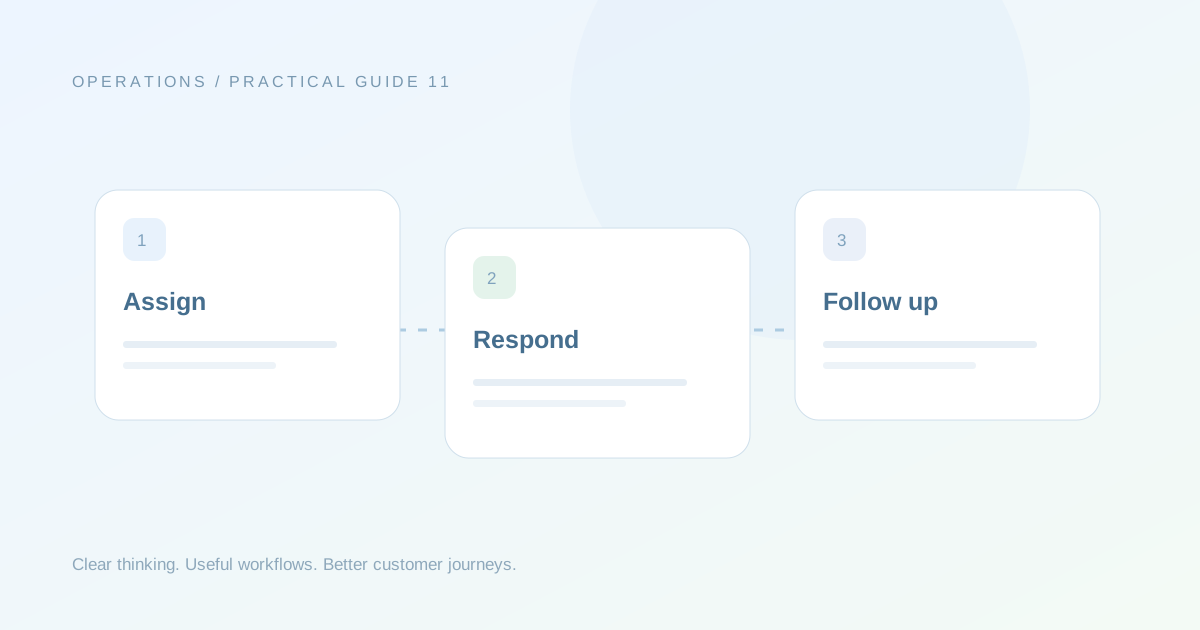
Start with the enquiry types that need different handling. Product advice, order assistance and specialist questions may belong to different people. Define who watches new conversations and when they should be reassigned. Keep the categories understandable to the team. An assignment is a responsibility for the next useful action, not just a label on a conversation.
Keep handovers concise and useful
A good handover includes the customer’s question, relevant details already collected and the reason for the transfer. Avoid making the customer repeat the same enquiry. Distinguish customer-visible replies from internal notes. If a request needs another system, keep the reference with the conversation. Agree what the receiving person needs before they can help.
Close the loop on follow-ups
Decide how pending work is reviewed and how a conversation is marked complete. A customer waiting for a stock check needs a different next step from a resolved delivery question. Record the owner and the reason for the follow-up. Review a few sample conversations regularly to find repeated questions, unclear transfers and opportunities for helpful automation.
Your practical checklist
- New-chat owner defined.
- Enquiry categories agreed.
- Transfer summary format prepared.
- Pending follow-up review assigned.
- Completion criteria documented.